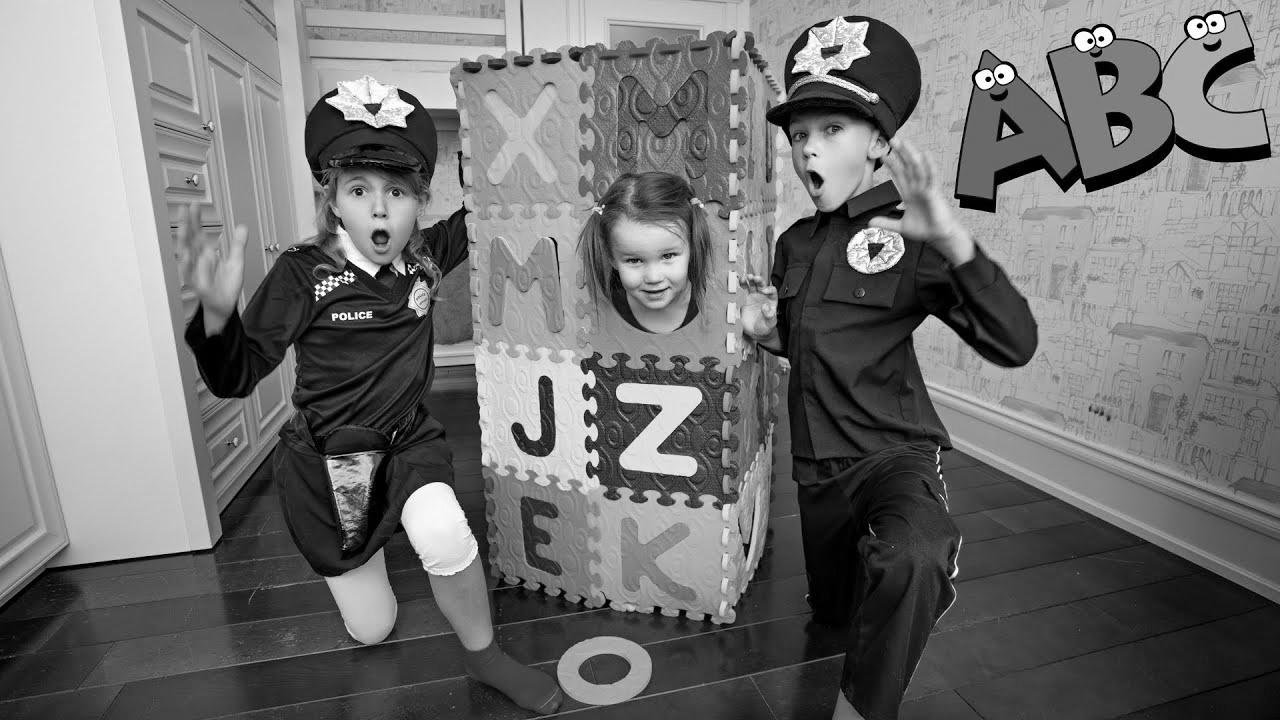
5 Kids Learn the alphabet ABC + more Children’s Songs and Videos
Warning: Undefined variable $post_id in /home/webpages/lima-city/booktips/wordpress_de-2022-03-17-33f52d/wp-content/themes/fast-press/single.php on line 26
Learn , 5 Children Learn the alphabet ABC + extra Children's Songs and Videos , , R1IGVEUQdc4 , https://www.youtube.com/watch?v=R1IGVEUQdc4 , https://i.ytimg.com/vi/R1IGVEUQdc4/hqdefault.jpg , 34109323 , 5.00 , A new collection video, including one in every of our most recent songs, "Be taught the alphabet ABC" , 1629204812 , 2021-08-17 14:53:32 , 00:37:41 , UCLbyJSPEe2lx3jY-G0CFR3g , Vania Mania Youngsters , 76980 , , [vid_tags] , https://www.youtubepp.com/watch?v=R1IGVEUQdc4 , [ad_2] , [ad_1] , https://www.youtube.com/watch?v=R1IGVEUQdc4, #Youngsters #Learn #alphabet #ABC #Childrens #Songs #Videos [publish_date]
#Kids #Learn #alphabet #ABC #Childrens #Songs #Videos
A new assortment video, together with considered one of our most up-to-date songs, "Study the alphabet ABC"
Quelle: [source_domain]
- Mehr zu learn Eruditeness is the procedure of feat new sympathy, cognition, behaviors, trade, values, attitudes, and preferences.[1] The ability to learn is berserk by humans, animals, and some machinery; there is also evidence for some kind of education in definite plants.[2] Some learning is fast, iatrogenic by a single event (e.g. being baked by a hot stove), but much skill and noesis amass from perennial experiences.[3] The changes iatrogenic by learning often last a lifetime, and it is hard to distinguish knowledgeable substantial that seems to be "lost" from that which cannot be retrieved.[4] Human eruditeness get going at birth (it might even start before[5] in terms of an embryo's need for both action with, and freedom inside its environs within the womb.[6]) and continues until death as a outcome of on-going interactions 'tween fans and their situation. The nature and processes involved in education are unstudied in many constituted comic (including informative science, psychophysiology, psychology, cognitive sciences, and pedagogy), besides as rising fields of knowledge (e.g. with a shared involvement in the topic of encyclopedism from safety events such as incidents/accidents,[7] or in collaborative encyclopedism condition systems[8]). Investigate in such william Claude Dukenfield has led to the identification of assorted sorts of encyclopedism. For good example, education may occur as a consequence of physiological state, or conditioning, operant conditioning or as a result of more intricate activities such as play, seen only in relatively born animals.[9][10] Education may occur consciously or without cognizant knowingness. Eruditeness that an dislike event can't be avoided or loose may event in a condition known as educated helplessness.[11] There is testify for human behavioural learning prenatally, in which dependency has been observed as early as 32 weeks into biological time, indicating that the fundamental queasy organisation is sufficiently matured and ready for learning and memory to occur very early in development.[12] Play has been approached by single theorists as a form of encyclopaedism. Children scientific research with the world, learn the rules, and learn to interact through and through play. Lev Vygotsky agrees that play is crucial for children's growth, since they make significance of their environment through and through performing arts acquisition games. For Vygotsky, even so, play is the first form of encyclopedism language and human activity, and the stage where a child started to see rules and symbols.[13] This has led to a view that eruditeness in organisms is primarily affiliated to semiosis,[14] and often connected with mimetic systems/activity.